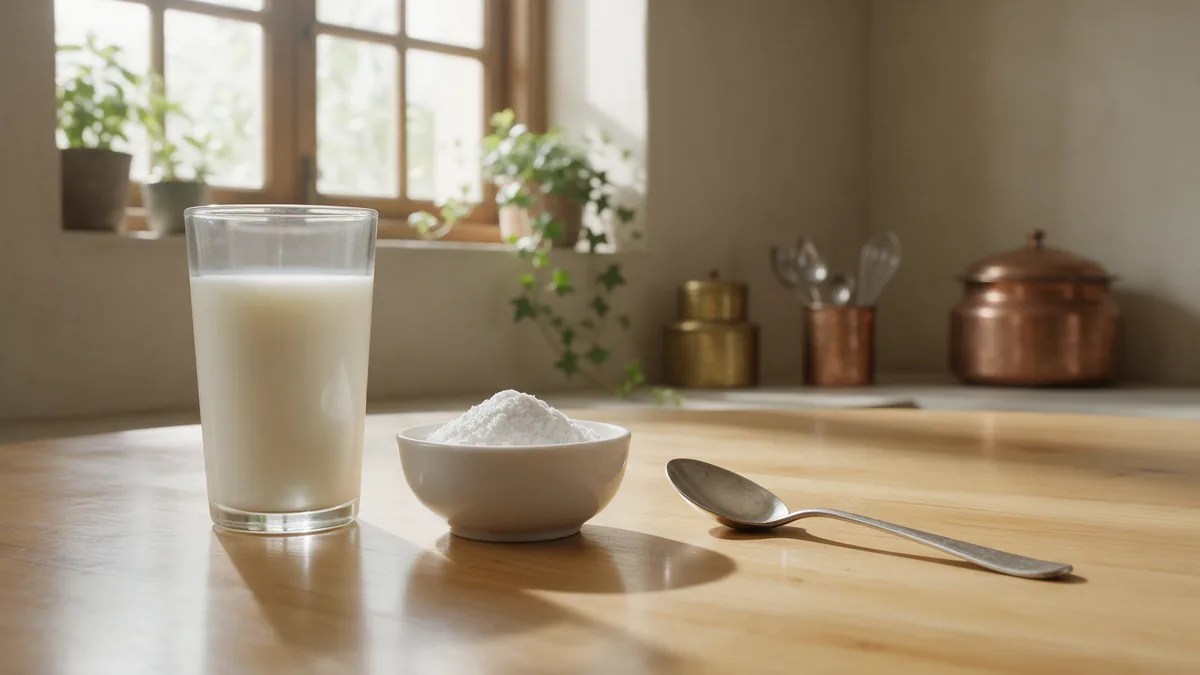
Yes, you can take creatine with milk, and it works just as well as taking it with water. The protein and carbohydrate in milk may modestly help your muscles retain creatine, unflavoured powder dissolves in it without fuss, and the only real catch is that some flavoured creatines can curdle it. If milk is what you have on the table every morning, use it.
Does milk affect how creatine is absorbed?
Creatine is absorbed in the small intestine and taken up by muscle regardless of what you drink it in. Milk does not block or slow this. If anything, the research points the other way: the International Society of Sports Nutrition notes that taking creatine alongside carbohydrate, or carbohydrate plus protein, can increase how much of it your muscles hold onto, because the insulin response helps drive creatine into muscle cells. A glass of milk delivers both, in modest amounts.
This is a small effect, not a large one. Taking creatine with milk is not going to double your results. But it means the common worry — that milk somehow "cancels" creatine — is backwards. Creatine in milk is a perfectly good way to take it.
Creatine with milk or water: which is better?
For the creatine itself, it makes no difference. Both get the dose into you. The choice comes down to practicalities:
- Water is simplest, has no calories, mixes instantly with a micronised powder and suits any flavour. It is the better choice if you take creatine with a pre-workout or a post-workout shake, or if you are watching calories.
- Milk adds around 8 g of protein and 12 g of carbohydrate per 250 ml, which is useful if you are trying to gain, and it fits naturally into a morning routine. It is the better choice for people who are already drinking a glass each day and just want somewhere to put their dose.
The best answer is whichever one you will actually do every day. Creatine works by keeping your muscles saturated over weeks, so consistency beats the vehicle. For more on that, see our post on taking creatine on rest days.
Flavoured creatine in milk: the curdling problem
This is the one thing worth knowing. Many flavoured creatines — especially citrus flavours like lemon, orange or sweet lime — use citric acid or malic acid for tartness. Acid plus milk protein equals curdling. The result is safe to drink, and the creatine is unaffected, but the texture is unpleasant and the taste is odd.
The fix is simple: use unflavoured creatine in milk, and save flavoured creatine for water. Unflavoured creatine monohydrate is neutral and slightly chalky on its own, which milk hides well. If you already own a flavoured tub, mix it in water and drink your milk separately.
Hot milk, cold milk and chai
Cold or room-temperature milk is ideal. Warm milk is fine too — creatine does not break down at drinking temperatures. What you should avoid is boiling creatine or leaving it sitting in hot liquid for a long time, because heat combined with time speeds up its conversion to creatinine, which is inert. Stir it into milk that is ready to drink, then drink it. Do not add it to the pan.
Chai follows the same logic. You can stir unflavoured creatine into a cup of tea once it is poured. The tannins in tea do not interfere with creatine. Just drink it within a few minutes rather than letting it sit.
Lactose intolerance and creatine
Lactose intolerance is common in India, and creatine has a small reputation for causing bloating on its own. If you are lactose intolerant and take creatine with milk, you may blame the creatine for symptoms that are really the milk. If you get gas or stomach discomfort, try the same dose in water for a week. If the symptoms disappear, it was the milk. Curd (dahi) and buttermilk (chaas) are lower in lactose and work well as alternatives — creatine stirs into both.
A practical daily routine
The simplest version for most Indian households: one scoop of unflavoured creatine — 3 g to 5 g — stirred into your morning glass of milk, every day, including rest days. That is it. No loading phase is needed, no timing precision, no special conditions. If you prefer a post-workout window, the same scoop goes into water or a protein shake instead.
If you are also taking whey, read our guide to mixing creatine with whey protein — milk, whey and creatine together in one shake is a common and perfectly reasonable combination.
What to look for in the creatine itself
The vehicle matters far less than the powder. Choose a creatine monohydrate that is micronised (it dissolves better in milk, which is thicker than water), that shows a real batch test, and that is sold under a valid FSSAI licence. Every Coremax batch is third-party tested and made in an FSSAI-licensed facility. You can see all sizes and flavours on our creatine page.
Frequently asked questions
Can I take creatine with milk?
Yes. Creatine is absorbed normally when taken with milk, and the protein and carbohydrate in milk may slightly improve how much creatine your muscles retain. Use unflavoured creatine to avoid curdling.
Is creatine with milk better than with water?
For the creatine, they are equivalent. Milk adds protein and carbohydrate, which is helpful if you are trying to gain weight. Water is simpler and calorie-free. Pick whichever you will do consistently.
Does milk reduce creatine absorption?
No. There is no evidence that milk reduces creatine absorption. The insulin response to milk's carbohydrate and protein may modestly increase muscle creatine uptake.
Why does my flavoured creatine curdle milk?
Flavoured creatines often contain citric or malic acid for taste. Acid curdles milk protein. The mixture is safe but unpleasant. Use unflavoured creatine in milk and flavoured creatine in water.
Can I take creatine with hot milk?
Yes, at drinking temperature. Stir it in once the milk is ready to drink and drink it promptly. Avoid boiling creatine or leaving it in hot liquid for a long time.
Can I take creatine with curd or buttermilk?
Yes. Both are lower in lactose than milk and work well for people who are lactose intolerant. Stir the powder in and eat or drink it straight away.
Sources
- International Society of Sports Nutrition position stand: safety and efficacy of creatine supplementation
- Cleveland Clinic — Creatine
- Examine.com — Creatine evidence summary
Creatine is a food supplement, not a medicine, and does not treat, cure or prevent any disease. If you are pregnant or breastfeeding, have kidney or liver disease or diabetes, or take prescription medication, speak to a doctor before starting any supplement.